
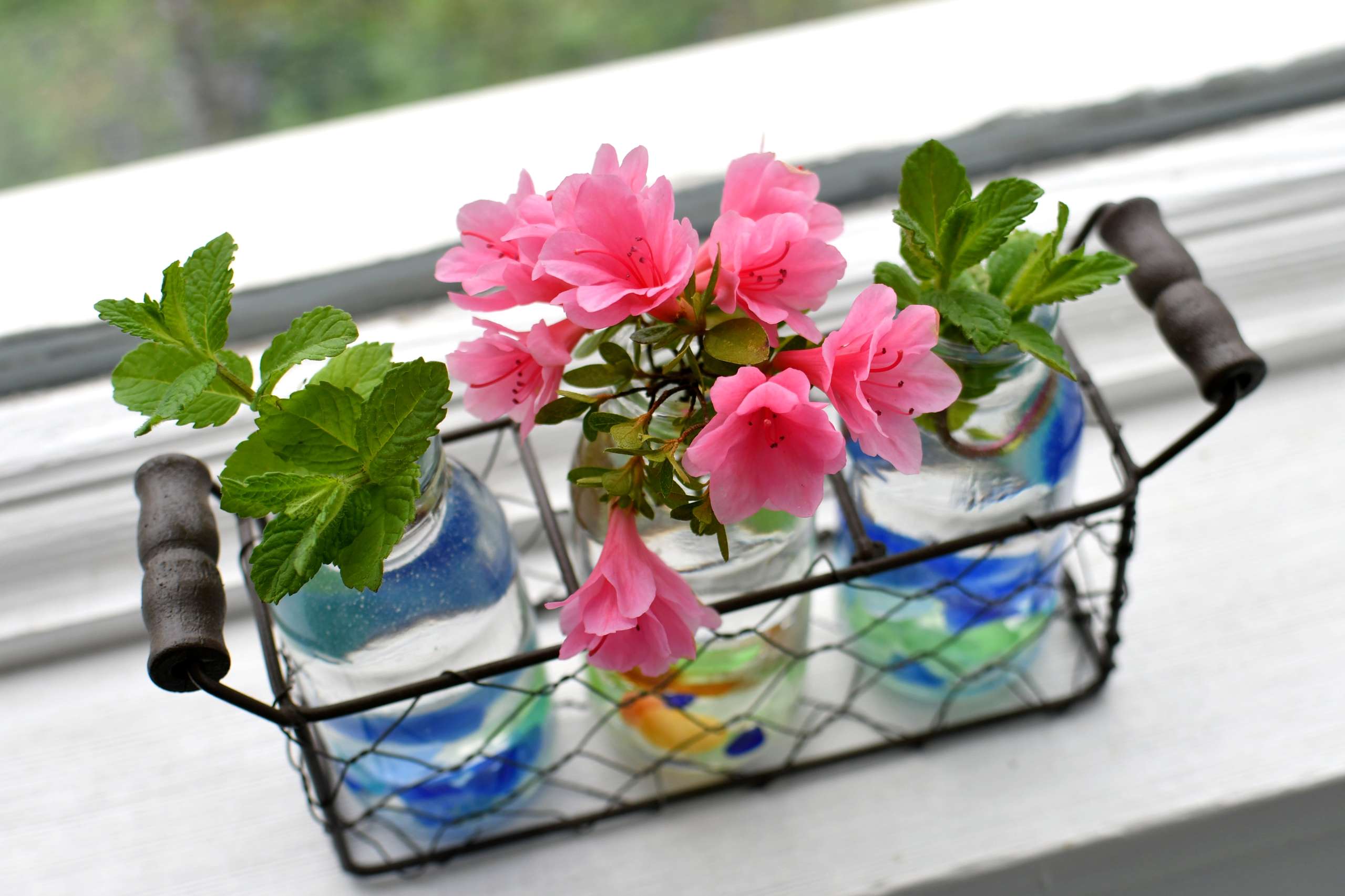
There is a moment, just after you rinse a jar or bottle, when the glass stands clean and dripping on the counter. Most people see only an empty container ready for the recycling bin. We see possibility.
Empty glass is silent. It carries no label, no story yet. It waits.
That waiting is what makes this craft different from almost any other. A blank canvas already holds the weight of expectation — white space demanding to be filled perfectly. A piece of glass asks for nothing. It simply reflects light and lets you decide what it will become.
I keep a small shelf of “rescued” bottles in my studio: a thick green olive oil bottle with heavy shoulders, a slender violet medicine bottle from the 1940s, a simple spice jar with a neck that curves like a swan. Each was headed for the bin. Each now holds a season, a memory, or a feeling I needed to keep close.
Why glass speaks when other materials stay quiet
- Light moves through it, not just across it. Color glows instead of sitting flat. Shadows become part of the design.
- Imperfections are forgiven. A tiny bubble trapped during manufacturing, a faint seam, a slight wave in the wall — these become character, not flaws.
- It remembers temperature and touch. The cool weight in your palm, the way condensation beads after a rinse, the soft clink when pieces meet — every sense is invited.
- It ages beautifully without trying. Years from now the paint may soften, the gold leaf may tarnish just enough, and the piece will feel even more alive.
The first time I painted a bottle and held it to the window, something shifted inside me. Sunlight poured through the layers of translucent color and scattered across the wall like stained glass. In that ordinary kitchen light, the bottle was suddenly a lantern carrying quiet joy.
That is the moment we chase in every project: turning water-clear nothing into something that holds light and memory in equal measure.
Next time you finish a jar of honey or a bottle of vanilla, pause. Hold it to the light. Listen to what it might want to say.